Tesla Powerwall 3 with 9.24KW Solar (First PW3!)
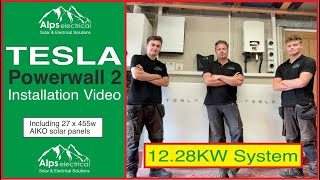
Our very first Tesla Powerwall 3 installation — a landmark moment for ALPS Electrical. The PW3 features a built-in inverter eliminating the need for a separate unit, simplifying installation and delivering a sleeker finish.
Full Installation Walkthrough
This installation represents a landmark moment in the history of ALPS Electrical: our very first Tesla Powerwall 3 installation. As a Tesla Certified Installer, we were among the first companies in the North East to receive Powerwall 3 units and the training to install them, and we were thrilled to complete this inaugural installation for an equally excited homeowner who had been eagerly awaiting the PW3 release.
The Tesla Powerwall 3 is a fundamentally different product from the Powerwall 2 that preceded it. The most significant change is the integration of a solar inverter directly into the Powerwall unit itself. This means that DC solar cables from the roof panels connect directly to the Powerwall 3, which handles both the DC to AC conversion and the battery charge and discharge management in a single, compact wall-mounted unit. There is no need for a separate string or hybrid inverter, which reduces the component count, simplifies the wiring and delivers a cleaner aesthetic finish.
The system design for this project featured a 9.24KW solar array feeding into the Powerwall 3, with the Tesla Gateway providing backup switching and energy monitoring. The 9.24KW array size was determined by the available roof space and the homeowners energy consumption profile, which included relatively high usage due to home working and electric vehicle charging.
The roof installation followed our established methodology, with panels mounted on the main south-facing roof in a configuration optimised for the Powerwall 3 input requirements. The PW3 has multiple MPPT inputs, allowing us to connect panel strings of different lengths or orientations without the strings affecting each other's performance. We used this capability to split the array across two roof faces, maximising the use of available space.
Inside the property, the installation was remarkably clean and efficient compared to a typical solar and battery installation. Where we would normally install a separate inverter, DC isolator, AC isolator and then a separate battery unit with its own isolator, the Powerwall 3 consolidates much of this into a single unit. The DC cables from the roof connect directly to the PW3, and the AC output connects to the Gateway and consumer unit. The reduction in components and cabling is immediately visible and significantly reduces the installation footprint on the wall.
The Tesla Gateway was installed adjacent to the main consumer unit and wired in the standard configuration that allows it to monitor and control the entire household electrical supply. The gateway tails were connected between the meter and the consumer unit, enabling the seamless automatic transfer to battery backup that Tesla Powerwall systems are renowned for.
As this was our first PW3 installation, we documented every stage of the process meticulously, both for our own reference and for the benefit of customers considering a Powerwall 3 system. The commissioning process through the Tesla app was intuitive and well-designed, with clear step-by-step prompts that guided us through the system configuration, network connectivity setup and performance verification.
The grid failure simulation test was the highlight of the commissioning process. We isolated the grid supply and observed the seamless transition to battery backup, with the entire property continuing to operate normally on Powerwall power. The PW3 handles this transition with exceptional speed, and the homeowner confirmed that they experienced no interruption whatsoever, not even a momentary flicker on the lights.
The Tesla app provides the homeowner with comprehensive monitoring of their energy system, including real-time solar generation, battery state of charge, home consumption and grid import and export. The app also shows historical data, allowing the homeowner to track their energy patterns over time and understand how the system performs across different seasons and weather conditions.
We registered the system with the Smart Export Guarantee for export payments and submitted the DNO notification to Northern Powergrid. The MCS certification was completed with all test results and equipment details, and the homeowner received the full handover pack including all warranties, certificates and our comprehensive operating guide.
The projected annual generation for this 9.24KW system is approximately 7,800kWh, and with the Powerwall 3 providing 13.5kWh of usable storage, the homeowner can expect to achieve self-consumption rates of sixty to seventy percent. The financial savings are substantial, and the added value of whole-home backup provides peace of mind that goes beyond simple economics.
Being the first installer in our region to complete a Powerwall 3 installation was an honour, and every PW3 installation we have completed since has reinforced our confidence in this exceptional product. The combination of solar inverter, battery storage and backup capability in a single sleek unit represents the future of residential energy systems, and we are proud to be at the forefront of delivering this technology to homeowners across the North East.
Project Specifications
| Category | Tesla |
| Location | North East |
| Specs | PW3 built-in inverter, first install |
| Duration | 13:30 |
Equipment Used
Tesla
Powerwall 3 with Built-in Inverter
Solar Panels
9.24KW Array
Video Chapters
Want a Similar System?
Get a free, no-obligation quote for a bespoke installation tailored to your property.
Get a Free QuoteOr call 01642 790 489




Interested in This Type of Installation?
Fill in the form and our team will get back to you within 24 hours with a free, no-obligation quote tailored to your property and energy needs.